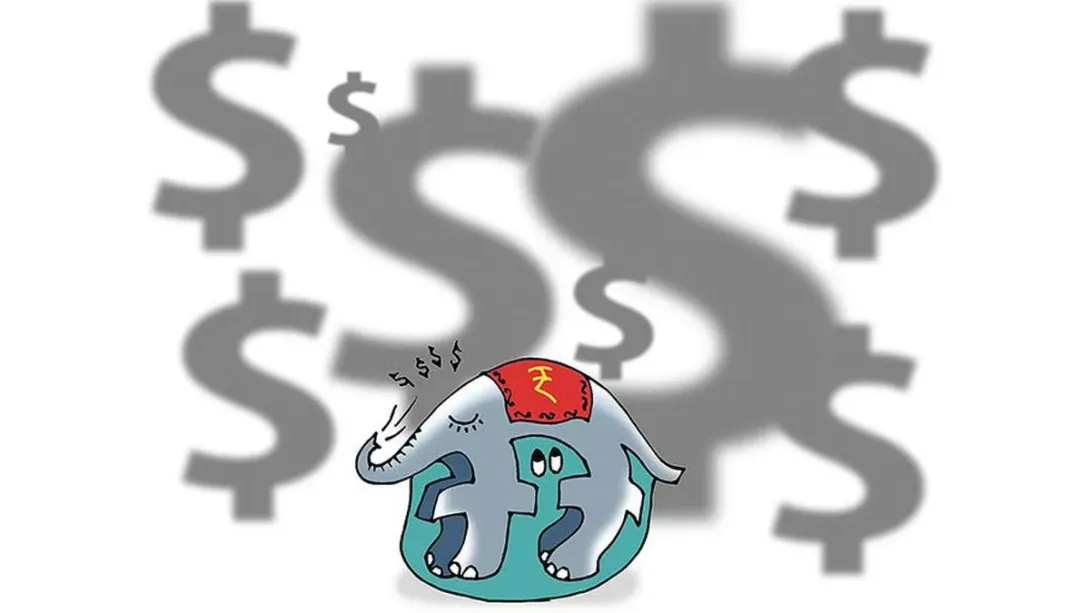
Indian equity markets are facing unprecedented pressure in 2025 as foreign portfolio investors (FPIs) execute their largest-ever withdrawal from domestic stocks. Driven by global monetary tightening, elevated valuations and rising geopolitical uncertainty, overseas investors have pulled substantial capital from Indian equities, triggering heightened volatility across benchmark indices. While domestic institutional investors have partly cushioned the impact, the scale of the outflow has raised concerns about near-term market stability. Analysts note that the exodus reflects broader global risk aversion rather than India-specific weakness, though it underscores the need for policy clarity and sustained economic momentum.
Record FPI Outflows Mark a Turning Point
Foreign portfolio investors have withdrawn record sums from Indian equities in 2025, marking one of the sharpest reversals in capital flows in recent history. Market data shows cumulative outflows running into several lakh crore rupees, eclipsing previous peaks seen during global crises. The sell-off has weighed heavily on frontline indices and mid-cap stocks, eroding market capitalization and dampening investor sentiment.
This retreat comes after years of strong foreign inflows that helped fuel India’s equity rally, making the reversal particularly significant for market participants.
Global Headwinds Drive Investor Caution
Analysts attribute the FPI exit primarily to global factors. Higher interest rates in developed economies, particularly the United States, have made bonds and dollar-denominated assets more attractive. At the same time, concerns over slowing global growth, persistent inflationary pressures and geopolitical tensions have prompted investors to reduce exposure to emerging markets.
India, despite its relatively strong macroeconomic fundamentals, has not been immune to this shift. Elevated equity valuations have further encouraged profit-taking by foreign funds.
Domestic Investors Offer Partial Support
Domestic institutional investors, including mutual funds and insurance companies, have stepped in to absorb some of the selling pressure. Steady inflows from retail investors and systematic investment plans have provided a degree of stability, preventing sharper market corrections.
However, market experts caution that domestic flows alone may not fully offset sustained foreign selling if global risk aversion persists. Liquidity conditions and earnings growth will remain critical in determining market direction.
Policy Outlook and Market Implications
From a policy perspective, economists stress the importance of fiscal discipline, structural reforms and policy continuity to reassure global investors. A stable regulatory environment and progress on infrastructure and manufacturing could help restore confidence over the medium term.
While the near-term outlook remains volatile, several analysts view the correction as an opportunity for long-term investors. India’s growth prospects, demographic advantages and expanding corporate earnings base continue to position it favorably once global conditions stabilize.
Comments