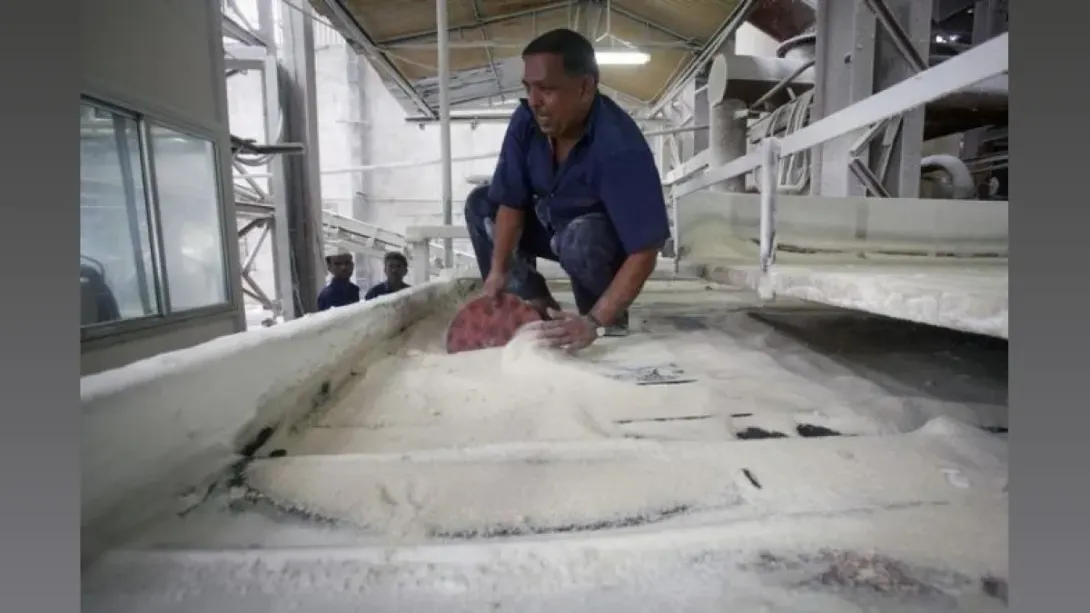
The Bihar government has initiated a strategic plan to revive several closed sugar mills across the state, seeking to stimulate rural employment, strengthen agricultural value chains and enhance industrial output. The revival initiative is expected to attract private investment, modernize outdated infrastructure and restore operational efficiency in a sector once central to the state’s economy. By aligning policy support with financial restructuring and technological upgrades, authorities aim to create a sustainable framework for long-term growth. The move is also intended to improve income stability for sugarcane farmers while reinforcing Bihar’s position in India’s sugar production landscape.
Rebuilding a Once-Thriving Industry
Bihar’s sugar industry was historically a pillar of the state’s agrarian economy. Over time, however, financial distress, outdated machinery and weak management structures forced multiple mills to shut down, disrupting supply chains and affecting farmer livelihoods.
The state government now plans a structured revival of these defunct units through public-private partnerships and targeted policy reforms. Officials indicate that the initiative will focus on operational viability rather than temporary relief, emphasizing efficiency, modernization and market competitiveness.
Reviving these mills is expected to generate direct and indirect employment, particularly in rural districts where industrial opportunities remain limited.
Strengthening the Sugarcane Ecosystem
Sugar mills form the backbone of the sugarcane value chain. Their closure not only halted industrial production but also undermined farmer confidence due to delayed payments and reduced procurement capacity.
By restoring milling operations, the government aims to ensure timely cane procurement and payment mechanisms, which are crucial for farmer income stability. Improved infrastructure and streamlined logistics could also reduce post-harvest losses and enhance productivity.
Agricultural economists suggest that a stable procurement ecosystem will incentivize farmers to increase acreage under sugarcane cultivation, further boosting rural incomes.
Investment and Modernization Strategy
The revival plan is expected to involve capital infusion for refurbishing plant machinery, upgrading energy systems and improving operational efficiency. Many of the closed mills suffer from obsolete equipment that limits output and raises maintenance costs.
Modern sugar processing technology, including energy-efficient boilers and cogeneration systems, could transform these mills into integrated industrial units. By leveraging by-products such as molasses and bagasse, mills can diversify revenue streams through ethanol production and power generation.
With India’s broader push toward ethanol blending in fuel, revitalized sugar mills could benefit from emerging demand in biofuel markets.
Financial Restructuring and Policy Support
Reviving non-operational industrial assets requires careful financial engineering. Authorities are expected to evaluate debt restructuring models, asset monetization frameworks and investor participation mechanisms to ensure commercial sustainability.
Incentives such as tax relief, land use facilitation and streamlined approvals may be offered to attract private sector participation. Transparent bidding processes and performance benchmarks will be critical to maintaining investor confidence.
Experts caution that long-term success will depend on sound governance, cost control and adherence to market-driven pricing mechanisms.
Broader Economic Implications
The sugar industry has multiplier effects across transportation, logistics, packaging and rural services. Restoring closed mills could stimulate ancillary industries and strengthen district-level economies.
Furthermore, ethanol production capacity expansion aligns with national energy security objectives, reducing reliance on imported fuel components. By integrating agricultural output with energy policy goals, Bihar may position itself as a regional hub for agro-based industrial growth.
The revival initiative reflects a broader shift toward leveraging legacy industrial assets for sustainable economic expansion.
Conclusion: A Strategic Bet on Agro-Industrial Renewal
Bihar’s decision to revive closed sugar mills represents a calculated attempt to blend industrial rejuvenation with rural development. If executed with fiscal prudence and operational discipline, the initiative could reinvigorate a sector that once anchored the state’s economy.
The challenge lies in transforming historically distressed assets into competitive, technology-driven enterprises. Success will hinge on transparent governance, investor participation and alignment with evolving energy and agricultural policies.
For Bihar, the revival of its sugar mills is more than an industrial reform—it is a strategic effort to restore economic momentum at the grassroots level.
Comments