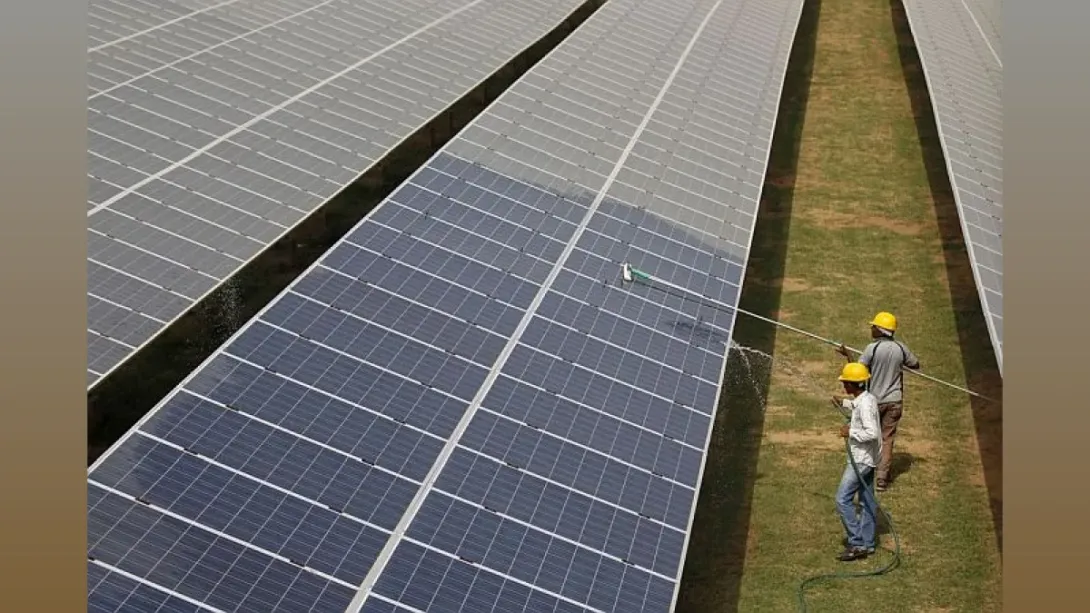
Borosil Renewables Ltd, India’s leading solar glass manufacturer, reported a consolidated net loss of Rs. 272 crore for the first quarter, marking a significant downturn in its financial performance. The loss comes on the back of sustained pricing pressure from cheaper imports and muted domestic demand for solar components. While the company remains committed to long-term capacity expansion and localization, the near-term operating environment remains challenging. This Q1 performance raises concerns about the broader solar manufacturing ecosystem in India, particularly amid aggressive international competition and the need for stronger policy safeguards.
---
Financial Snapshot: Sharp Decline in Profitability
For the first quarter of FY2025, Borosil Renewables posted a consolidated net loss of Rs. 272 crore, reversing its earlier trend of profitable growth. The company cited a combination of factors including underutilized capacity, falling glass prices, and a surge in low-cost imports as primary contributors to the decline.
Revenue also took a hit, reflecting the subdued sentiment across India’s solar supply chain. Operational efficiency metrics declined, with gross margins narrowing and fixed overheads remaining elevated relative to reduced sales volumes.
---
Cheaper Imports Erode Domestic Market Share
A significant factor in Borosil Renewables' Q1 performance was the influx of low-cost solar glass imports, predominantly from Southeast Asian and Chinese manufacturers. These imports continue to undercut Indian products, even as the domestic industry pushes for self-reliance under the government’s “Atmanirbhar Bharat” initiative.
The company has previously called for more stringent trade protections and anti-dumping duties to safeguard local manufacturers, but regulatory enforcement remains inconsistent. The resulting pricing pressure has forced Borosil to either match global rates or cede market share, both of which weigh heavily on margins.
---
Demand Softness Adds to Margin Strain
Beyond competition, demand-side weakness has also exacerbated challenges. While India’s solar capacity addition targets remain ambitious, actual execution at the utility scale has slowed due to regulatory delays, financing issues, and grid integration constraints. This has translated into lower-than-expected offtake of key components like solar glass.
Residential and commercial rooftop segments, while more resilient, are not large enough to offset the decline in utility-driven demand. As a result, Borosil has faced an imbalance between capacity and offtake, leading to higher per-unit production costs and idle capacity losses.
---
Strategic Outlook and Mitigation Measures
Despite the quarterly setback, Borosil Renewables has reiterated its long-term commitment to expanding its manufacturing footprint. The company is actively pursuing backward integration, technological upgrades, and exploring export markets to diversify revenue streams.
Additionally, Borosil has advocated for policy interventions, including tariff adjustments and stricter customs monitoring, to create a level playing field. The firm is also evaluating cost optimization measures and supply chain rationalization to improve operational agility in a volatile market.
Analysts believe that while short-term headwinds persist, Borosil’s core competencies in innovation and sustainability position it well for recovery once structural challenges are addressed.
---
Implications for India’s Solar Manufacturing Ambitions
The performance of Borosil Renewables is emblematic of broader vulnerabilities within India’s renewable energy manufacturing ecosystem. Despite bold policy ambitions and Production-Linked Incentive (PLI) schemes, domestic manufacturers continue to face uneven competition, policy lag, and capital access constraints.
For India to genuinely emerge as a global solar manufacturing hub, greater coherence between industrial policy and trade enforcement will be critical. Companies like Borosil, which have invested in scaling local capacity and R&D, need stronger institutional support to withstand international market pressures.
---
Conclusion: Navigating a Period of Flux
Borosil Renewables’ Q1 loss of Rs. 272 crore underscores the challenges faced by Indian manufacturers at the intersection of global competition and domestic policy friction. While the company remains strategically aligned with India’s renewable energy goals, it must now navigate a difficult operational environment with agility, resilience, and proactive policy engagement. The coming quarters will be crucial in determining whether Borosil can stabilize its financials and reclaim its growth trajectory in a highly dynamic energy transition landscape.
Comments