India

By Sachman Kochar , 16 January 2026

Jaro Education has entered into a strategic partnership with Delhi Technological University (DTU) to introduce a new range of online degree programs, marking a significant step in the evolution of India’s higher education landscape. The collaboration aims to make quality university education more accessible to working professionals and students seeking flexible learning options. By combining DTU’s academic credibility with Jaro Education’s digital delivery expertise, the initiative is designed to address skill gaps in a rapidly changing job market.

By Eknath Deshpande , 15 January 2026

Public sector banks are increasingly refining salary account offerings to meet the evolving financial needs of government employees. The DFS Salary Account Package, designed specifically for central and state government staff, reflects a broader push to combine convenience, security, and long-term financial planning under one umbrella. The package typically offers zero-balance facilities, preferential loan rates, insurance cover, and digital banking privileges.

By Binnypriya Singh , 14 January 2026

India’s Unified Payments Interface is set for its next phase of expansion, with the Reserve Bank of India projecting a doubling of users to nearly one billion in the coming years. The forecast underscores UPI’s evolution from a convenience-led payment tool into the backbone of the country’s digital financial ecosystem. Rapid smartphone adoption, deeper internet penetration, and policy-led financial inclusion have accelerated usage across urban and rural markets alike.

By Binnypriya Singh , 13 January 2026

India’s equity markets witnessed a sharp bout of volatility as several leading companies collectively lost Rs 3.63 lakh crore in market capitalization within a short span. The sell-off reflected growing investor caution amid global uncertainties, mixed corporate earnings, and persistent concerns over inflation and interest rates. Heavyweight stocks bore the brunt of the decline, dragging benchmark indices lower and eroding recent gains. Analysts view the correction as a recalibration of valuations rather than a structural breakdown, though near-term sentiment remains fragile.

By Sachman Kochar , 13 January 2026

India has moved to significantly strengthen oversight of the digital asset ecosystem by tightening Know Your Customer (KYC) norms for cryptocurrency platforms. Under the updated compliance framework, users will now be required to submit real-time selfies and enable geo-tagging during onboarding and verification processes. The measures are aimed at curbing misuse of virtual digital assets, improving traceability, and aligning crypto compliance with standards followed in traditional financial systems.

By Eknath Deshpande , 13 January 2026

Gold and silver markets are poised for heightened volatility next week as investors await a crucial US tariff-related verdict that could reshape global trade dynamics. Precious metals, often viewed as safe-haven assets, have shown cautious movement amid uncertainty over policy outcomes and their potential inflationary and currency implications. Market participants are closely monitoring signals from global equities, bond yields, and the US dollar, all of which could react sharply once clarity emerges.

By Binnypriya Singh , 13 January 2026

India is steadily emerging as a key partner for developing nations in the global transition toward renewable energy. By leveraging its experience in large-scale solar, wind, and clean power deployment, the country is extending technical expertise, financial support, and policy cooperation to energy-deficient economies. This approach blends climate responsibility with economic diplomacy, helping partner nations reduce fossil fuel dependence while strengthening energy security.

By Tushar Sharma , 12 January 2026

India’s fiscal consolidation path for FY26 is gaining credibility, with PwC expressing optimism about the government’s ability to meet its fiscal deficit target. Supported by steady revenue growth, disciplined expenditure management, and sustained economic momentum, the outlook suggests improving macroeconomic stability. Strong tax collections, rationalization of subsidies, and higher capital expenditure efficiency are expected to play a critical role.

By Sachman Kochar , 12 January 2026

Financial markets navigated a decisive phase in the third quarter as corporate earnings reports and key inflation indicators emerged as the dominant forces influencing investor sentiment. Strong performances across select sectors offered reassurance about business resilience, while persistent inflation data kept expectations around interest rates and monetary policy firmly in focus. Equity indices reflected this push and pull, reacting sharply to earnings surprises and macroeconomic cues.

By Binnypriya Singh , 12 January 2026

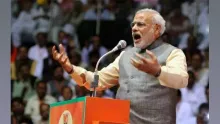
Prime Minister Narendra Modi has asserted that India is experiencing an unprecedented phase of certainty, marked by policy continuity, institutional strength, and long-term economic vision. Addressing the broader direction of the Indian economy, Modi emphasized that predictable governance and reform-led policymaking have replaced years of uncertainty. This shift, he said, has strengthened investor confidence, accelerated capital formation, and improved India’s global credibility.