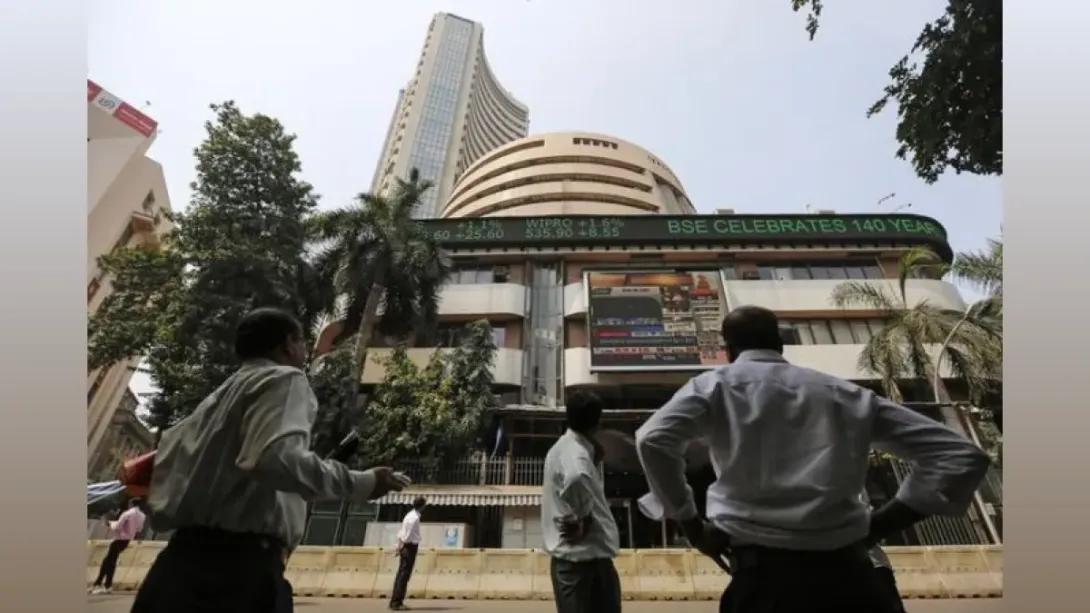
Several of India’s largest publicly listed companies witnessed a significant erosion in their combined market capitalization last week, with total losses estimated at approximately Rs 2.81 lakh crore. The decline reflects broader volatility in the equity markets driven by global economic uncertainties, cautious investor sentiment, and sector-specific pressures. Major corporations across banking, information technology, and energy segments experienced notable valuation corrections. Analysts say such fluctuations are not uncommon during periods of macroeconomic adjustment and profit-booking by institutional investors. While the short-term decline has raised concerns among market participants, experts maintain that the long-term fundamentals of India’s corporate sector remain largely intact.
Market Volatility Triggers Valuation Declines
India’s equity markets recently experienced a period of turbulence that resulted in substantial declines in the market capitalization of several leading companies. The combined valuation of top-listed firms fell by approximately Rs 2.81 lakh crore over the course of the trading week.
Market capitalization, which reflects the total value of a company’s outstanding shares, is often influenced by investor sentiment, macroeconomic developments, and global financial conditions. When stock prices fall, the overall market value of companies declines accordingly.
The correction in valuations was observed across multiple sectors, highlighting the broad-based nature of the market adjustment.
Impact on India’s Corporate Heavyweights
Among the companies affected were several of India’s most prominent corporate entities, including Reliance Industries, Tata Consultancy Services, HDFC Bank, and Infosys.
These companies collectively account for a substantial share of India’s overall market capitalization and often serve as indicators of broader market trends. Declines in their share prices can significantly influence benchmark indices and investor confidence.
Financial analysts note that corrections in large-cap stocks are not unusual, particularly after periods of strong rally when investors choose to lock in profits.
Global Factors Weigh on Investor Sentiment
The recent decline in valuations has also been linked to external economic developments. Global financial markets have been grappling with concerns related to interest rate trajectories, geopolitical tensions, and fluctuations in commodity prices.
Such uncertainties often prompt investors to adopt a cautious approach, leading to short-term sell-offs in equity markets. Institutional investors, including foreign portfolio investors, frequently rebalance their portfolios during these periods to manage risk exposure.
As a result, even fundamentally strong companies can experience temporary declines in share prices.
Sector-Specific Pressures
In addition to global influences, certain sectors faced particular headwinds during the trading week. Technology stocks, including those of Infosys and Tata Consultancy Services, have recently encountered concerns related to slowing global demand for IT services.
Similarly, banking and financial services firms such as HDFC Bank have been navigating regulatory changes, interest rate dynamics, and evolving credit market conditions.
Meanwhile, energy and conglomerate firms like Reliance Industries are often affected by movements in global commodity prices and broader market sentiment.
Long-Term Outlook Remains Stable
Despite the recent decline of Rs 2.81 lakh crore in combined market value, market experts emphasize that such corrections are a routine feature of equity markets. Short-term fluctuations often occur as investors react to economic data, corporate earnings, and global developments.
Over the longer term, India’s economic growth prospects, expanding consumer base, and increasing digital adoption continue to support the outlook for major corporations.
Analysts believe that companies with strong balance sheets, diversified revenue streams, and consistent earnings growth are well positioned to recover from temporary market downturns.
Investor Perspective
For investors, episodes of market volatility can present both risks and opportunities. While sudden declines in valuations may trigger concern, they can also create attractive entry points for long-term investors seeking exposure to fundamentally strong businesses.
Financial advisers generally recommend focusing on long-term investment strategies rather than reacting to short-term market fluctuations.
As India’s economy continues to expand and corporate profitability improves, leading companies are expected to remain central to the country’s capital markets and wealth creation landscape.
Comments