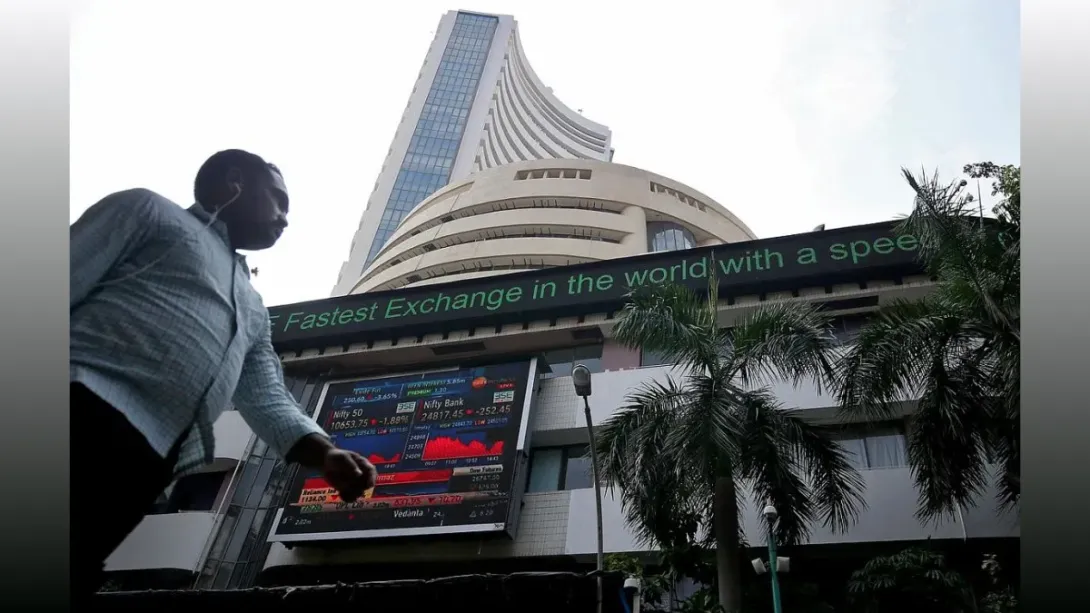
India’s equity markets are navigating a delicate phase as global macroeconomic indicators and foreign institutional investor (FII) activity exert growing influence on near-term direction. Persistent inflation concerns, shifting interest rate expectations and currency volatility are colliding with uneven corporate earnings. At the same time, foreign investors have turned cautious, recalibrating exposure amid global risk repricing. Domestic fundamentals remain resilient, but sentiment is fragile. Market participants are increasingly data-dependent, tracking inflation prints, growth numbers and capital flows for cues. The outlook suggests heightened volatility, with stock performance likely to hinge on macro stability and the return of sustained foreign inflows.
Macro Data Takes Center Stage
Economic data has emerged as the primary driver of market sentiment. Inflation trends, GDP growth estimates and central bank policy signals are being closely scrutinized by investors. Recent data points indicate that while growth remains intact, price pressures have yet to fully subside, complicating the policy outlook.
Interest rate expectations, both domestic and global, continue to shape equity valuations. Any deviation from anticipated monetary easing could trigger swift market reactions, particularly in rate-sensitive sectors such as banking, real estate and automobiles.
FII Activity Signals Caution
Foreign institutional investors have adopted a guarded stance, trimming exposure to Indian equities amid global uncertainty. Elevated bond yields in developed markets and a stronger U.S. dollar have reduced the relative appeal of emerging-market assets, including India.
Record or near-record outflows in select months have weighed on benchmark indices, amplifying volatility. Analysts note that FII flows are increasingly tactical rather than long-term, responding quickly to global risk cues and currency movements.
Domestic Investors Provide a Counterbalance
Despite foreign selling, domestic institutional investors and retail participants have offered meaningful support to the market. Systematic investment plan inflows remain steady, reflecting long-term confidence in India’s growth story.
This domestic participation has helped cushion sharp declines, although it has not been sufficient to drive a decisive upward trend in the absence of foreign capital support.
Sectoral Impact and Market Strategy
Macro uncertainty and uneven capital flows have led to divergent sectoral performance. Export-oriented stocks are sensitive to currency fluctuations, while consumption-driven sectors are closely tied to inflation and income growth.
Market strategists advise a selective approach, emphasizing balance sheets, earnings visibility and pricing power. In the near term, equities are expected to remain range-bound, with sharp reactions to economic data releases and FII flow trends.
Outlook: Volatility with Opportunity
The stock market outlook remains cautiously optimistic over the medium term, underpinned by structural growth drivers. However, short-term movements are likely to be dictated by macro stability and the behavior of foreign investors.
Comments