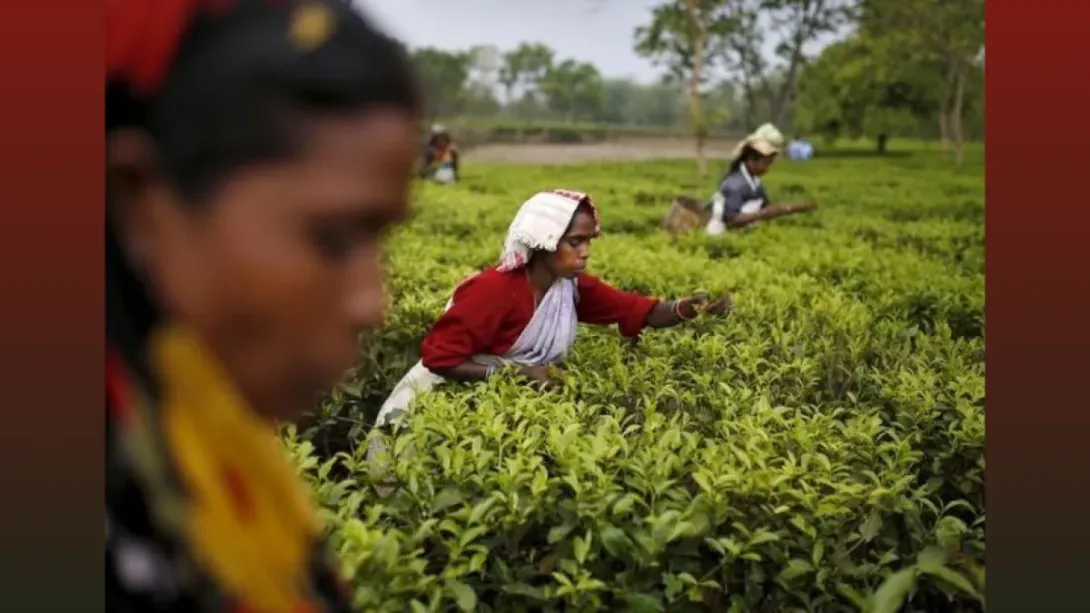
India’s tea sector is confronting escalating financial stress as rising input costs, stagnant auction prices, labour shortages and climate volatility converge to erode profitability. Industry representatives warn that many estates are selling tea below production cost, triggering higher borrowings and liquidity strain. Wages, which account for nearly 60 per cent of total production expenses, have made the industry particularly vulnerable to inflationary pressures. With fertiliser, coal, pesticide and electricity prices climbing sharply — and power costs alone estimated at Rs 10-11 per kg of made tea — planters are urging structural reforms and policy intervention to ensure long-term sustainability.
Structural Strain in a Legacy Industry
India’s tea industry, one of the country’s oldest agro-based sectors and a major rural employer, is grappling with a widening gap between production costs and realizations. Estate owners across key producing regions report that input inflation has accelerated while auction prices have remained largely stagnant, compressing margins to unsustainable levels.
According to industry leaders, several plantations are now compelled to offload tea below cost, undermining balance sheets and increasing dependence on debt financing. The sector’s working capital cycle, already lengthy due to agricultural seasonality, has tightened further amid rising borrowing costs.
Wage Burden and Cost Inflation
Labour-intensive by nature, tea cultivation relies heavily on manual plucking and processing. Wages constitute nearly 60 per cent of the cost structure, making estates acutely sensitive to revisions in minimum wage norms and broader inflationary trends.
Beyond labour, other operational inputs have witnessed steep escalation. Fertilisers, pesticides and coal — essential for maintaining yield and processing efficiency — have become significantly more expensive in recent years. Electricity expenses alone are estimated at approximately Rs 10-11 per kg of made tea, adding considerable strain to production economics.
This inflationary surge has not been matched by proportional growth in sale prices, leaving planters with diminishing returns.
Climate Volatility and Productivity Risks
Adding to financial pressure is the growing unpredictability of climate patterns. Erratic rainfall, prolonged dry spells and unseasonal temperature shifts have affected crop cycles and leaf quality. Lower yields and inconsistent output further weaken economies of scale, exacerbating cost inefficiencies.
Climate-induced stress not only reduces volume but also impacts quality — a critical determinant of price realization in domestic and export markets. Industry stakeholders argue that without investment in adaptive agricultural practices, productivity could decline structurally.
Market Dynamics and Price Stagnation
While production expenses have climbed steadily, tea prices have not seen commensurate appreciation. Competitive pressures, fluctuating export demand and shifting consumer preferences have constrained the industry’s pricing power.
Planters emphasize that sustainability hinges on producing higher-grade teas capable of commanding premium rates. However, transitioning to quality-focused production requires capital investment, research support and market repositioning — resources that financially stressed estates struggle to mobilize.
Call for Policy Support and Reform
Industry representatives are seeking targeted policy measures to alleviate stress. Proposed interventions include rationalization of power tariffs, subsidies for input costs, enhanced access to low-interest credit and incentives for modernization.
Structural reforms aimed at boosting export competitiveness and strengthening branding initiatives are also under discussion. Analysts suggest that a coordinated approach — combining government support, technological innovation and supply chain optimization — could stabilize the sector.
The Path Forward
India’s tea industry remains a vital contributor to rural employment and export earnings. However, its current trajectory underscores the fragility of traditional agro-industries operating under inflationary and climatic pressures.
Without decisive reforms and renewed focus on value addition, the financial stress confronting tea estates may intensify. For a sector steeped in history and economic significance, the challenge now lies in adapting to modern cost realities while preserving long-term viability.
Comments