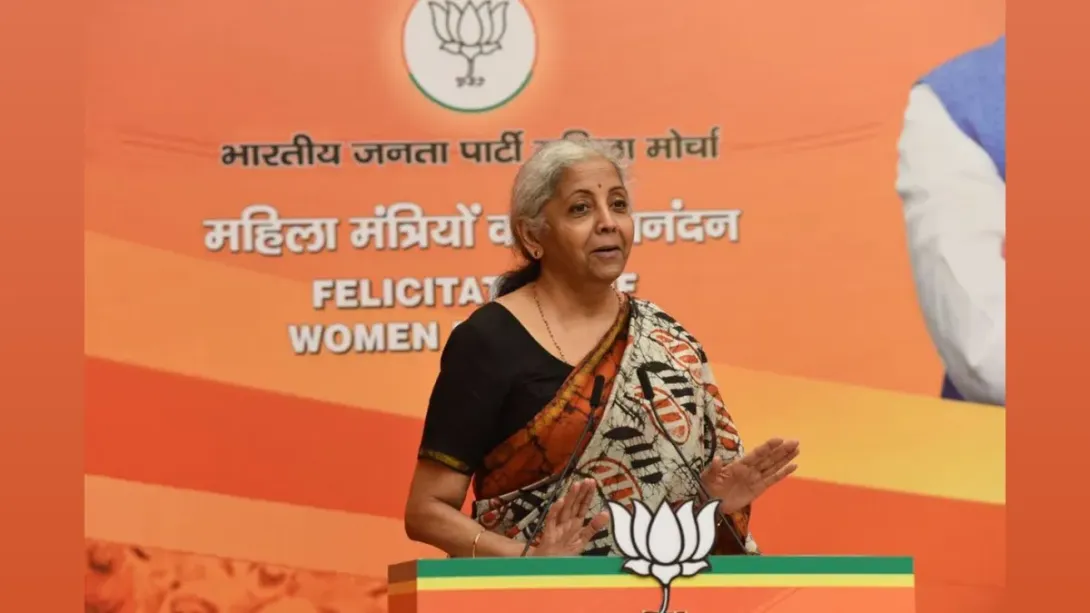
Finance Minister Nirmala Sitharaman has described the Goods and Services Tax (GST) overhaul as a “people’s reform,” emphasizing its role in creating a transparent, simplified, and consumer-friendly tax regime. Since its implementation, GST has been projected as one of the most ambitious tax transformations in India’s history, unifying multiple indirect taxes into a single system. The government contends that the reform not only streamlines compliance for businesses but also reduces cascading taxes for consumers, thereby fostering efficiency, fairness, and long-term economic growth.
Unifying the Tax Landscape
The GST framework replaced a complex web of central and state levies, ranging from excise duty to value-added tax, with a single harmonized system. This transition has been hailed as a structural shift that reduces tax-related distortions across markets. For businesses, the uniformity offers a level playing field, ensuring smoother interstate trade and improved logistics.
Sitharaman has repeatedly underlined that GST represents more than a fiscal exercise—it symbolizes cooperative federalism. States are now active stakeholders in shaping tax rates and structures, making policy more responsive to the needs of local economies.
Relief for Small Enterprises
One of the notable aspects of the reform is the attention given to small and medium-sized enterprises (SMEs). The introduction of composition schemes, higher exemption thresholds, and simplified filing mechanisms have reduced the compliance burden on smaller players. For many small traders, GST eliminates the challenge of dealing with multiple tax authorities, allowing them to focus on business expansion.
Moreover, the government’s decision to digitize returns and payments has improved efficiency while curbing tax evasion. These changes align with the broader vision of formalizing India’s largely unorganized sector and bringing more businesses into the formal economy.
Consumer Benefits and Transparency
For consumers, GST has minimized the cascading effect of “tax on tax,” ensuring that goods and services are more competitively priced. By integrating various levies into a single structure, the reform enhances transparency in pricing, allowing buyers to clearly understand the tax component of their purchases.
Additionally, the shift toward digital compliance has enabled real-time monitoring of transactions, helping authorities detect anomalies and improve accountability. Analysts argue that this technological backbone not only strengthens enforcement but also builds public trust in the system.
Challenges and the Road Ahead
Despite its benefits, the rollout of GST has not been without challenges. Technical glitches, compliance complexities in the initial stages, and differing state-level priorities have occasionally sparked criticism. For businesses operating on tight margins, adapting to frequent rate revisions and rule changes has been demanding.
However, policymakers maintain that such hurdles are part of any large-scale reform and that the system has gradually stabilized. The focus now lies on refining the structure, rationalizing tax slabs, and addressing sector-specific concerns to ensure GST continues to serve as a growth catalyst.
A Reform Beyond Taxation
Sitharaman’s description of GST as a “people’s reform” underscores its broader socio-economic dimension. The reform not only reshapes India’s taxation but also encourages greater financial discipline, transparency, and inclusivity. By integrating small traders, improving consumer trust, and strengthening federal cooperation, GST reflects an economic philosophy rooted in fairness and accessibility.
As India advances toward becoming a $5 trillion economy, the continued evolution of GST will remain central to balancing revenue generation with the need for equitable growth. The reform, while imperfect, stands as a cornerstone in modernizing India’s fiscal architecture.
Comments