
Union Budget 2026

By Sachman Kochar , 3 February 2026

Indian equity markets advanced ahead of the Union Budget 2026-27, as investors positioned themselves in anticipation of policy signals on growth, spending, and fiscal discipline. Benchmark indices recorded modest gains, supported by selective buying in heavyweight stocks and expectations of continued government focus on capital expenditure. Improved domestic macro indicators and relatively stable global cues also contributed to the positive tone.

By Gurjot Singh , 2 February 2026

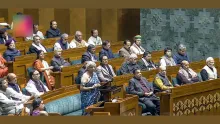
Indian equity markets remained volatile in the run-up to the Union Budget 2026-27, as investors weighed policy expectations against global economic uncertainty. Benchmark indices swung between gains and losses, reflecting caution ahead of key announcements on fiscal strategy, taxation, and government spending. Market participants are closely tracking signals on capital expenditure, fiscal deficit management, and sector-specific incentives that could influence earnings outlooks.

By Binnypriya Singh , 2 February 2026

Finance Minister Nirmala Sitharaman met President Droupadi Murmu on the eve of presenting the Union Budget for fiscal year 2026-27, marking a key constitutional step before the annual financial statement is tabled in Parliament. The customary meeting underscored the government’s final preparations for a budget expected to balance fiscal discipline with growth priorities. Against a backdrop of moderating inflation, evolving global risks, and domestic demands for jobs and investment, the budget is anticipated to outline the government’s economic roadmap for the coming year.

By Gurjot Singh , 1 February 2026

India’s Union Budget 2026 is expected to balance growth stimulation with fiscal prudence as policymakers navigate global uncertainty and domestic development priorities. With inflation moderating and capital expenditure emerging as a key growth lever, the government is likely to focus on infrastructure expansion, manufacturing incentives, and employment generation. Tax rationalisation, targeted social welfare spending and green investment may also feature prominently. Markets will closely watch fiscal deficit projections, borrowing plans and policy signals for private investment.