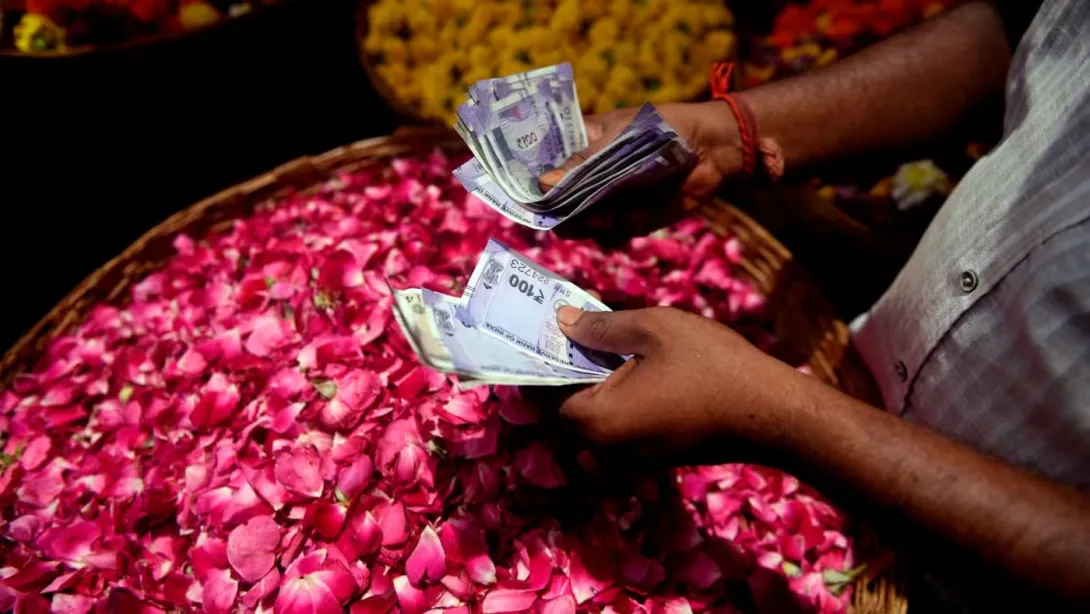
The Indian rupee has plunged to a record low against the US dollar, reflecting a convergence of global and domestic pressures that are reshaping currency markets. A combination of rising crude oil prices, persistent foreign capital outflows, and a stronger greenback has eroded investor confidence in the rupee. While the Reserve Bank of India (RBI) has intervened periodically to curb volatility, its efforts have only slowed the pace of depreciation, not reversed the trend. The currency’s decline is raising concerns about imported inflation, trade deficits, and financial stability, underscoring the vulnerabilities of emerging markets in today’s volatile global economy.
Global Headwinds Driving Dollar Strength
The rupee’s weakness is primarily linked to the US dollar’s renewed strength, driven by expectations of higher-for-longer interest rates from the Federal Reserve. Robust economic data from the United States has further reinforced demand for the dollar as a safe-haven asset. This global trend has intensified pressure on emerging market currencies, including the rupee, as investors shift funds into US treasuries and dollar-denominated assets.
Impact of Rising Oil Prices
India, as one of the world’s largest importers of crude oil, is particularly sensitive to energy price fluctuations. The recent rally in global crude oil prices has widened India’s import bill, deepening the current account deficit and weakening the rupee further. Every rise of one dollar per barrel in crude oil prices translates into an additional burden on India’s external balance sheet, directly impacting the exchange rate.
Foreign Capital Outflows and Equity Market Pressures
Another factor driving the rupee’s fall is sustained foreign portfolio outflows. Global investors have pulled funds from Indian equity and debt markets, preferring safer assets amid rising US yields and geopolitical uncertainty. This capital flight has weighed on domestic markets, amplifying volatility and reducing the rupee’s resilience. Analysts caution that continued outflows could exacerbate pressure on India’s external reserves if the trend persists.
RBI’s Response and Policy Dilemma
The Reserve Bank of India has attempted to stem the rupee’s decline through strategic dollar sales from its foreign exchange reserves, which remain robust above Rs. 65 lakh crore (approx. USD 780 billion). However, constant intervention carries risks, including depleting reserves and unsettling investor sentiment. Policymakers now face the delicate task of balancing exchange rate stability with inflation control, while ensuring that India’s growth momentum remains intact.
Implications for Inflation and Growth
A weaker rupee raises the cost of imports, particularly for fuel, edible oils, and essential commodities, potentially stoking inflation. Higher input costs could also squeeze corporate margins, dampen consumer demand, and strain government finances. On the other hand, the depreciation may benefit exporters in sectors such as IT services and pharmaceuticals, though these gains may not fully offset the broader economic impact.
Outlook: Navigating a Volatile Currency Landscape
The rupee’s record low highlights the challenges faced by emerging markets navigating a volatile global financial environment. With global monetary tightening, energy shocks, and geopolitical risks likely to persist, analysts warn that the rupee may remain under pressure in the near term. For India, the path forward lies in reinforcing macroeconomic stability, attracting long-term capital inflows, and accelerating structural reforms to build resilience against external shocks.
Comments