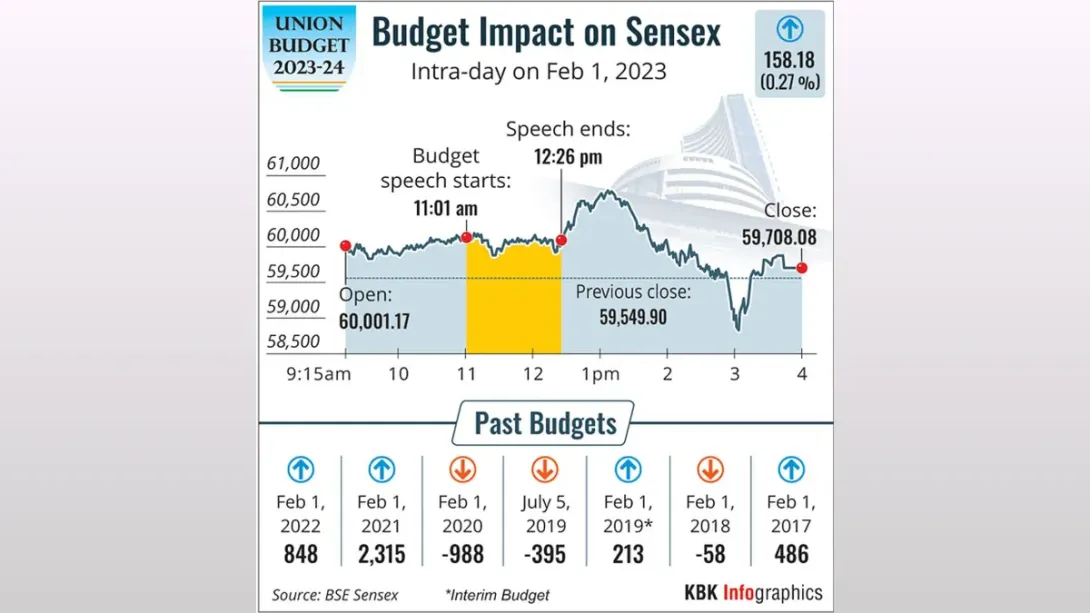
Indian stock markets traded with sharp intraday swings ahead of the Union Budget 2026-27, reflecting heightened investor caution and restrained risk appetite. Benchmark indices struggled for direction as market participants assessed expectations around fiscal discipline, government spending, and tax policy. Global cues, including uncertainty over interest rates and commodity prices, further clouded sentiment. With the budget expected to set the economic agenda for the coming year, investors remained hesitant to take large positions, opting instead for selective buying and profit booking. The volatility underscores the market’s sensitivity to policy signals at a time of mixed global and domestic economic indicators.
Budget Countdown Fuels Market Uncertainty
Equity markets entered a phase of heightened volatility as the countdown to the Union Budget 2026-27 intensified. Trading sessions were marked by alternating gains and losses, with investors unwilling to commit decisively ahead of clarity on fiscal priorities. Historically, the days leading up to the budget often witness such nervousness, as policy announcements can materially alter sectoral prospects.
Market breadth remained narrow, suggesting that caution outweighed conviction across most segments.
Global Factors Add Pressure
External developments amplified domestic market swings. Concerns over the trajectory of interest rates in advanced economies, along with fluctuating crude oil prices, weighed on investor confidence. Emerging markets, including India, tend to be particularly sensitive to global liquidity conditions, influencing foreign portfolio flows and currency stability.
These global uncertainties reinforced a defensive stance among institutional investors.
Sectoral Moves Reflect Policy Expectations
Sector performance mirrored investor assumptions about budget outcomes. Infrastructure, capital goods, and construction-related stocks saw sporadic interest on expectations of sustained public spending. In contrast, financial and IT stocks traded in a tight range as investors awaited guidance on credit growth, regulatory outlook, and global demand trends.
Consumption-linked stocks also moved unevenly, with market participants watching for potential tax relief measures that could support household spending.
Key Budget Signals Markets Are Tracking
Investors are closely monitoring several policy indicators: the fiscal deficit target for 2026-27, the scale and composition of capital expenditure, and any revisions to personal or corporate tax structures. Clarity on disinvestment plans, subsidy reforms, and medium-term fiscal consolidation could play a decisive role in shaping post-budget market direction.
Bond yields and liquidity conditions will also respond to the government’s borrowing roadmap.
Volatility Likely to Persist in the Near Term
Market strategists caution that pre-budget volatility is a recurring feature rather than an anomaly. While short-term fluctuations may continue until the budget is unveiled, longer-term market performance will ultimately hinge on earnings growth, macroeconomic stability, and policy credibility.
As investors await definitive cues from Budget 2026-27, markets remain range-bound, balancing near-term uncertainty against India’s longer-term growth narrative.
Comments