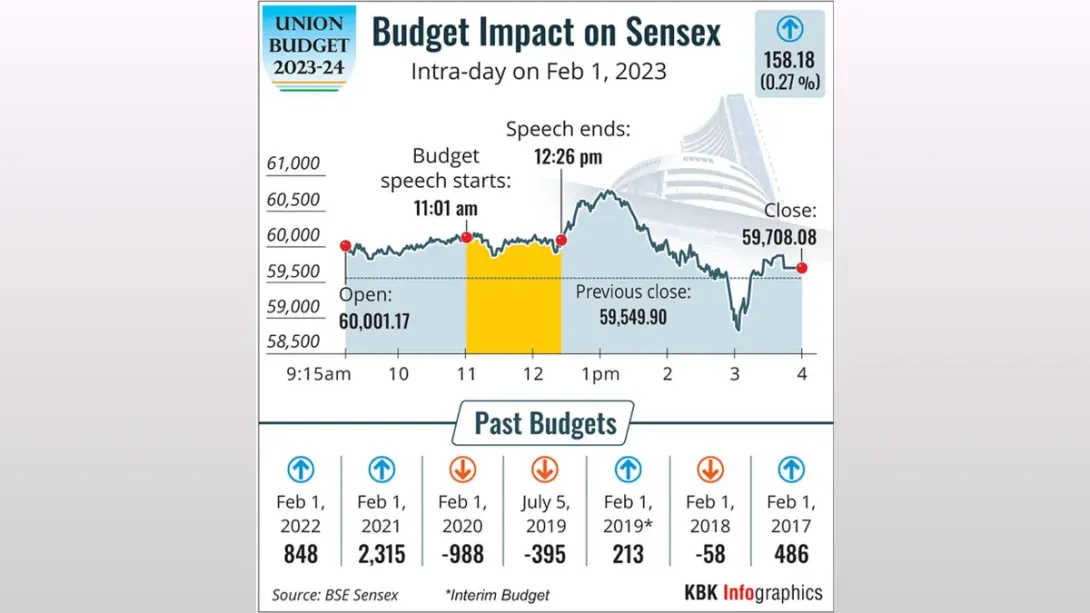
Indian equity markets remained volatile in the run-up to the Union Budget 2026-27, as investors weighed policy expectations against global economic uncertainty. Benchmark indices swung between gains and losses, reflecting caution ahead of key announcements on fiscal strategy, taxation, and government spending. Market participants are closely tracking signals on capital expenditure, fiscal deficit management, and sector-specific incentives that could influence earnings outlooks. The choppy trade underscores a broader wait-and-watch approach, with domestic investors balancing optimism over India’s growth prospects against concerns around global interest rates, geopolitical risks, and near-term valuation pressures.
Budget Anticipation Drives Market Swings
Equity markets witnessed heightened volatility as traders positioned themselves ahead of the Union Budget 2026-27. The benchmark indices oscillated through the session, mirroring uncertainty over the government’s policy stance on spending, taxation, and reforms. Historically, budget days have triggered sharp market reactions, prompting investors to limit aggressive bets in the days leading up to the announcement.
Analysts noted that caution prevailed across sectors, with short-term traders booking profits while long-term investors largely stayed on the sidelines.
Global Cues Add to Uncertainty
Overseas developments compounded domestic volatility. Mixed signals from global equity markets, fluctuating crude oil prices, and lingering concerns over interest rate trajectories in major economies weighed on sentiment. Any rise in global yields tends to pressure emerging market assets, including Indian equities, by tightening financial conditions and influencing foreign fund flows.
As a result, foreign institutional investors remained selective, contributing to intraday swings in frontline stocks.
Sectoral Performance Reflects Policy Bets
Sector-specific movements highlighted investor expectations from the budget. Infrastructure and capital goods stocks saw intermittent buying on hopes of sustained public investment, while banking and financial shares moved cautiously amid uncertainty over credit growth and regulatory signals.
Consumption-oriented sectors also traded unevenly, as investors looked for clarity on tax relief measures that could bolster household spending.
What Markets Are Watching Closely
Market participants are focused on a few key indicators from the budget: the fiscal deficit target for 2026-27, the scale of capital expenditure, and any changes to personal or corporate tax structures. Clarity on subsidy rationalization, disinvestment plans, and reform timelines could further shape market direction in the weeks following the budget.
Bond markets are equally alert, with government borrowing plans likely to influence yields and liquidity conditions.
Short-Term Volatility, Long-Term Focus
Analysts caution that budget-related volatility is typically short-lived, with markets eventually aligning to fundamentals such as earnings growth, macroeconomic stability, and policy credibility. While near-term swings may persist until the budget is unveiled, India’s structural growth story continues to provide a supportive backdrop for long-term investors.
As the countdown to Budget 2026-27 continues, markets remain poised for direction, awaiting definitive cues from the government’s fiscal blueprint.
Comments