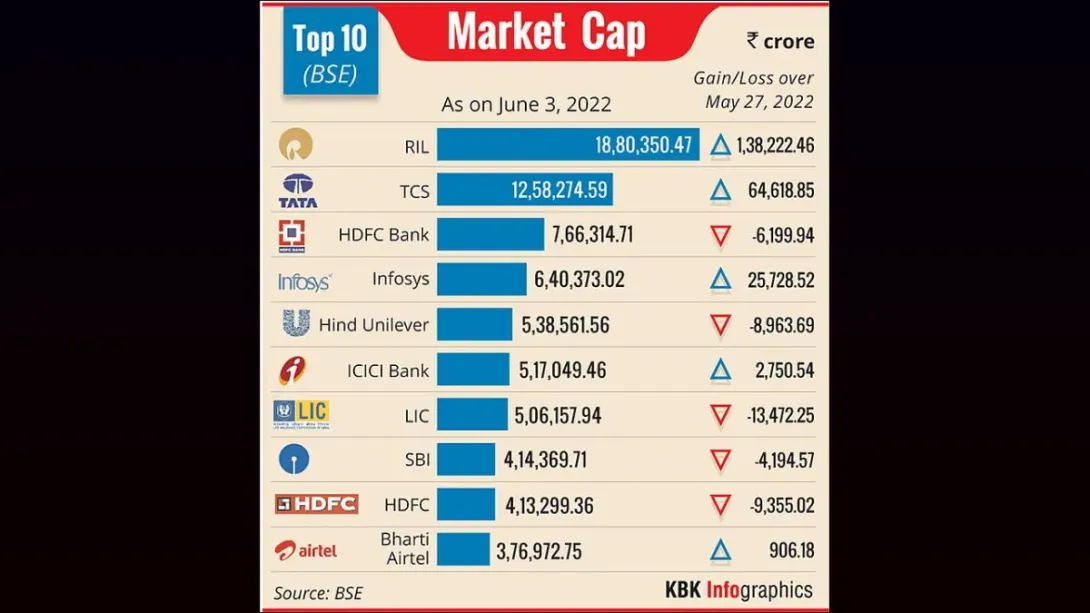
India’s equity markets witnessed a sharp erosion in investor wealth as some of the country’s most prominent listed companies collectively lost Rs 35,439 crore in market capitalization during the latest trading spell. The downturn, driven by weak global cues, persistent foreign investor selling and sector-specific pressures, weighed heavily on frontline stocks. State Bank of India (SBI) emerged as the worst performer among large-cap names, reflecting concerns over margins, asset quality and broader financial-sector sentiment. The episode highlights growing investor caution amid volatile macroeconomic conditions and underscores the fragile confidence shaping market movements in 2025.
Sharp Decline in Market Capitalization
The domestic equity market extended its losing streak as selling pressure intensified across heavyweight stocks. According to market data, the combined market capitalization of top firms declined by Rs 35,439 crore over a short period, marking one of the more pronounced valuation corrections this year. Benchmark indices reflected the weakness, with banking, metals and select technology stocks leading the slide.
Analysts attribute the decline to a convergence of global uncertainty, elevated interest rates in developed markets and sustained risk aversion among institutional investors.
SBI Bears the Brunt
State Bank of India, the country’s largest lender by assets, accounted for a significant share of the value erosion. The stock underperformed peers amid concerns around near-term earnings growth, pressure on net interest margins and cautious commentary on credit costs.
Market participants noted that while SBI’s long-term fundamentals remain intact, short-term headwinds and valuation recalibration have dampened investor enthusiasm. The stock’s decline weighed heavily on overall banking sector sentiment.
Broader Sectoral Weakness
Beyond banking, several other blue-chip companies also witnessed notable declines in market capitalization. Capital goods, infrastructure and select consumer-facing firms faced selling pressure as investors booked profits and rebalanced portfolios.
The information technology sector showed relative resilience but failed to offset losses elsewhere. Defensive sectors, meanwhile, offered limited shelter as volatility remained elevated across the board.
What This Means for Investors
From a strategic perspective, analysts advise caution rather than panic. Market corrections of this nature, they argue, are not uncommon during periods of global uncertainty and policy transition. Long-term investors may find selective opportunities in fundamentally strong stocks that have corrected sharply.
However, near-term volatility is expected to persist, particularly as global monetary policy signals, geopolitical developments and foreign portfolio flows continue to influence market direction.
Outlook: Volatility Likely to Persist
Looking ahead, market experts believe sentiment will remain sensitive to macroeconomic data and corporate earnings commentary. While domestic growth prospects provide a supportive backdrop, external risks continue to cloud the outlook.
For now, the Rs 35,439 crore erosion in market value serves as a reminder that equity markets remain vulnerable to rapid shifts in confidence, reinforcing the need for disciplined investment strategies in an uncertain environment.
Comments