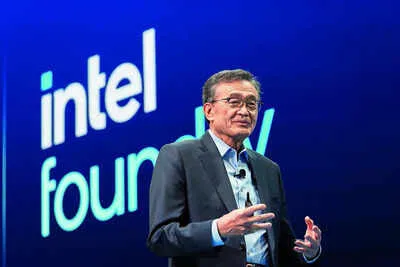
In a decisive move to recalibrate its long-term strategy, Intel Corporation has announced plans to lay off approximately 24,000 employees and halt several billion dollars’ worth of planned factory investments. This sweeping cost-cutting initiative comes as the chipmaker grapples with persistent profitability pressures and a rapidly shifting global semiconductor landscape. CEO Lip-Bu Tan described the decision as “hard but necessary,” reflecting the company’s pivot toward operational streamlining, capital efficiency, and recalibrated growth priorities. As Intel realigns its vision, the announcement underscores the far-reaching implications of transformation in the tech sector, where agility often demands painful recalibration.
---
Strategic Retrenchment: A Hard Pivot for Intel
Intel’s announcement marks one of the most significant restructurings in its history. The decision to eliminate 24,000 roles—roughly 15% of its global workforce—signals a stark response to declining margins and intensifying industry competition. The layoffs will span engineering, manufacturing, and corporate functions, with the bulk concentrated in underperforming verticals and overlapping operations.
The move comes amid heightened investor scrutiny over Intel’s lagging innovation cycle, operational inefficiencies, and mounting capital expenditures. By reducing workforce size, the company aims to realign costs with a more sustainable revenue outlook while preserving key investments in next-generation chip design and AI acceleration.
---
Factory Projects Cancelled as Capex Strategy Shifts
Alongside the workforce cuts, Intel has opted to cancel several planned manufacturing facility expansions worth billions of rupees. While the company had previously championed an aggressive global foundry expansion to rival Asian manufacturing giants, economic pressures and evolving demand forecasts have compelled a retreat from those commitments.
Rather than expanding its brick-and-mortar capacity, Intel now appears to be prioritizing technology partnerships, intellectual property development, and advanced packaging techniques. This realignment reflects a broader industry shift, where the focus has increasingly moved from sheer capacity to technological sophistication, modular efficiency, and collaborative innovation.
---
CEO Lip-Bu Tan Speaks: "Hard But Necessary"
In a note to employees and stakeholders, Intel CEO Lip-Bu Tan acknowledged the profound impact of the decision but emphasized its strategic imperative. “These are hard but necessary decisions,” he stated, highlighting the need for agility in an industry marked by volatility, supply chain fragmentation, and geopolitical tensions.
Tan emphasized Intel’s continued commitment to R&D, noting that the company would safeguard investments in AI, quantum computing, and advanced node development. “We are not retreating from innovation,” he added. “We are clearing the path to accelerate it more intelligently.”
---
Broader Implications for the Semiconductor Industry
Intel’s retrenchment is not an isolated event but part of a broader recalibration in the global semiconductor ecosystem. Major players across the U.S., Europe, and Asia are reassessing their capital-intensive strategies amid softening consumer demand, global inflationary trends, and slower enterprise IT spending.
At the same time, governments have begun to reconfigure subsidy frameworks, influencing corporate investment behavior. Intel’s decision may influence how peer companies such as AMD, TSMC, and Samsung weigh the risks of long-term capital projects against the need for near-term financial prudence.
---
The Road Ahead: Leaner, Sharper, More Focused?
As Intel enters its next chapter, the challenge will be to maintain competitiveness while operating with a leaner organizational structure. The success of this transformation will hinge on how well the company can optimize its engineering pipeline, foster innovation in critical technologies, and re-establish trust with shareholders.
If executed effectively, the restructuring could mark a turning point in Intel’s turnaround journey—one that transforms it from a legacy manufacturing giant into a nimbler, future-ready semiconductor powerhouse. However, the short-term pain is undeniable, and much will depend on how swiftly Intel can translate cuts into tangible performance gains.
---
Conclusion
Intel’s latest announcement underscores the difficult balancing act facing legacy tech giants in a new era of digital acceleration and fiscal discipline. While the layoffs and factory project cancellations may raise concerns in the short term, they also reflect a company grappling honestly with the realities of its environment. The coming quarters will reveal whether Intel’s bold cost-cutting gamble pays off—or simply signals the end of an era.
Comments