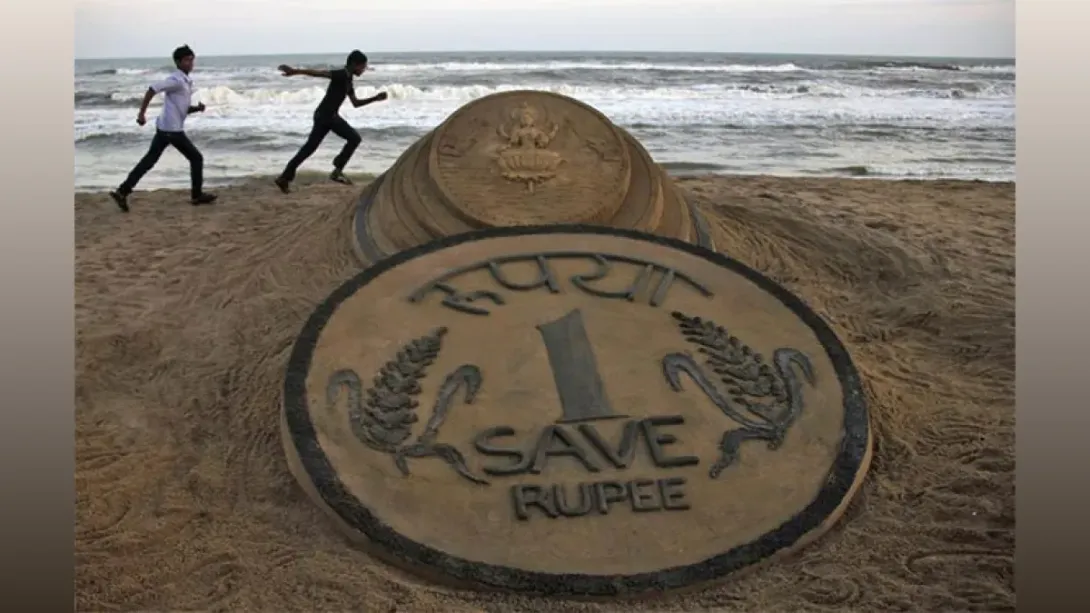
The Indian rupee extended its losing streak on Tuesday, weakening to a historic low of Rs. 87.95 against the US dollar. The decline was driven by a combination of robust demand for the greenback from oil importers, foreign fund outflows from domestic equities, and a broader rally in the dollar amid geopolitical and economic uncertainty. While the Reserve Bank of India (RBI) is suspected to have intervened in the forex market to stabilize volatility, the rupee’s sustained depreciation reflects global and local economic strains. The slide marks a critical juncture for policymakers and import-heavy sectors alike.
Rupee Hits All-Time Low Amid Broad Dollar Strength
The Indian rupee continued its downward trajectory, breaching the psychological barrier of Rs. 87.90 before settling at a record low of Rs. 87.95 against the US dollar. This marks a significant depreciation from Monday’s close and highlights persistent weakness in emerging market currencies as the US dollar index holds firm near multi-month highs.
This sustained pressure on the rupee has been largely attributed to the strengthening dollar, which has gained momentum due to higher US treasury yields, safe-haven demand triggered by ongoing geopolitical tensions, and upbeat economic data from the United States. Investors are increasingly turning to the dollar as a hedge against global uncertainty, leaving riskier currencies vulnerable.
RBI Intervention Suspected, But Impact Remains Marginal
According to market participants, the Reserve Bank of India likely stepped in intermittently through public sector banks to arrest the rupee’s fall and reduce intraday volatility. However, the interventions appear calibrated, as the central bank remains wary of burning through forex reserves in a one-sided defense of the currency.
While the RBI has consistently emphasized its intention to prevent excessive volatility, rather than target a specific exchange rate, the sharp slide toward Rs. 88 indicates the limitations of intervention in the face of sustained external pressures.
Foreign Outflows and Importer Demand Weigh on Sentiment
A key factor exacerbating the rupee's decline is the persistent capital outflow from Indian equity markets. Foreign institutional investors (FIIs) have been net sellers in recent sessions, trimming exposure to emerging market assets in favor of dollar-denominated instruments.
Additionally, large-scale dollar demand from oil marketing companies—owing to rising global crude prices—is adding stress to the rupee. With India being one of the world’s largest oil importers, even a modest surge in Brent crude can magnify the current account deficit and put further pressure on the currency.
What’s Next for the Rupee?
The near-term outlook for the rupee remains clouded by a confluence of global headwinds and domestic challenges. As long as the US Federal Reserve maintains its hawkish stance and geopolitical risks continue to stoke risk aversion, the rupee is unlikely to see any meaningful recovery.
However, a moderation in crude prices, coupled with potential inflows through upcoming IPOs or bond issuances, could provide temporary relief. Market analysts also suggest that any signs of easing US inflation could curb dollar strength and help stabilize the rupee.
Implications for the Indian Economy
A weaker rupee poses both challenges and opportunities. While it makes imports more expensive—thereby fanning inflationary pressures—it also makes Indian exports more competitive globally. Sectors such as IT services, pharmaceuticals, and textiles could benefit from currency depreciation.
Nevertheless, the broader macroeconomic risk lies in imported inflation, especially in energy and essential commodities. For consumers and businesses reliant on foreign inputs, the pressure on input costs could erode margins and affect pricing strategies.
Conclusion
The rupee’s descent to Rs. 87.95 against the US dollar serves as a stark reminder of India’s vulnerability to global monetary dynamics. As the dollar continues to dominate amid uncertainty, the rupee's trajectory will remain dependent on a delicate balancing act between external risks and domestic policy responses. For now, market watchers and policymakers alike must brace for heightened volatility in the foreign exchange landscape.
Comments