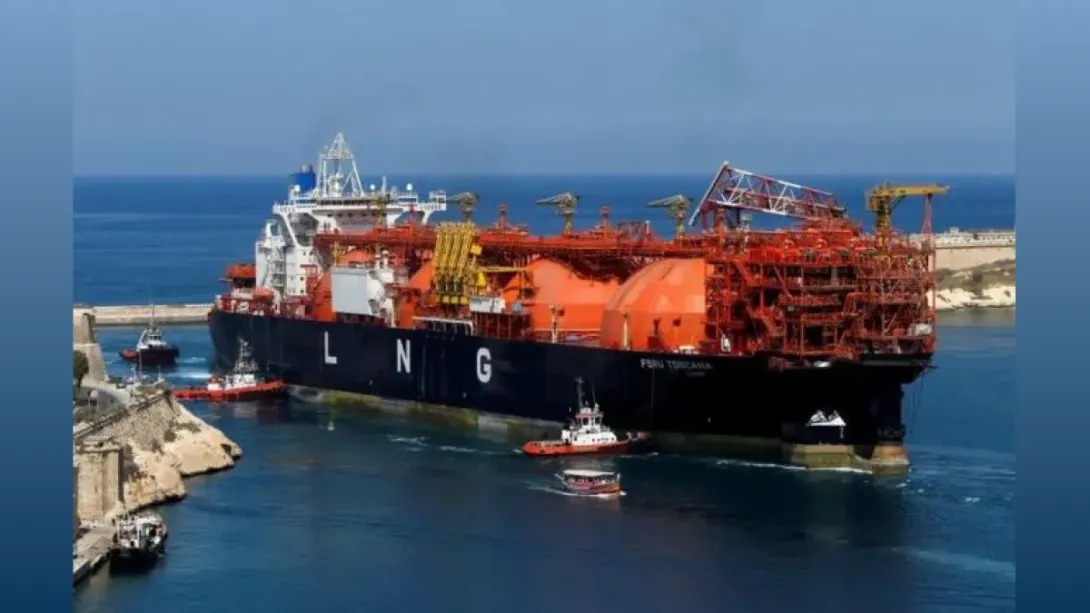
A significant step toward strengthening India’s clean energy infrastructure has been taken with the announcement of a new Floating Storage and Regasification Unit (FSRU) at the Haldia Dock Complex under Syama Prasad Mookerjee Port in Kolkata. The project, backed by an investment of approximately Rs. 260 crore, will be developed by East Horizon Pvt Limited following a licensing agreement with the port authority. Designed to receive, store, and convert liquefied natural gas into usable natural gas for distribution, the facility is expected to expand LNG handling capabilities in eastern India and support the country’s transition toward cleaner and more efficient energy sources.
Major LNG Infrastructure Project at Haldia Dock Complex
Syama Prasad Mookerjee Port in Kolkata has announced plans for a new liquefied natural gas infrastructure project at the Haldia Dock Complex, marking an important development in India’s evolving energy landscape.
The port authority has entered into a licensing agreement with East Horizon Pvt Limited to establish a Floating Storage and Regasification Unit. The project involves an estimated investment of Rs. 260 crore and aims to significantly enhance the region’s capability to receive and process LNG shipments.
The initiative represents a strategic effort to strengthen port-based energy infrastructure while expanding access to cleaner fuel alternatives in eastern India.
Understanding the Role of an FSRU
A Floating Storage and Regasification Unit serves as a specialized maritime facility designed to handle liquefied natural gas transported by tanker ships.
The unit functions as a floating terminal where LNG is received from carriers and stored in its liquefied form at extremely low temperatures. Once required, the LNG undergoes a regasification process that converts it back into natural gas, allowing it to be transported through pipelines to onshore distribution networks.
This infrastructure plays a critical role in enabling coastal regions to import and process LNG efficiently without the need for large land-based terminals.
Strategic Importance for Eastern India
The installation of the FSRU at Haldia Dock Complex is expected to improve the availability of natural gas in eastern India, a region that has historically faced infrastructure limitations in accessing LNG supplies.
Enhanced LNG import and processing capacity can support several industrial sectors, including power generation, manufacturing, petrochemicals, and city gas distribution networks.
By expanding natural gas infrastructure in the region, the project could also encourage new investments in energy-intensive industries that rely on stable and efficient fuel supply chains.
Supporting India’s Energy Transition
Natural gas is widely regarded as a transition fuel in the global shift toward cleaner energy systems. Compared with conventional fossil fuels such as coal and heavy fuel oil, natural gas produces significantly lower emissions of carbon dioxide and other pollutants.
By facilitating greater access to LNG, infrastructure projects like the Haldia FSRU can contribute to reducing industrial emissions and improving air quality in rapidly developing urban regions.
India has been steadily increasing its focus on expanding natural gas usage as part of its broader strategy to diversify energy sources and promote sustainable development.
Economic and Infrastructure Implications
The Rs. 260 crore investment in the floating terminal reflects the growing importance of port-led infrastructure development in India’s energy sector.
Ports are increasingly being integrated into the national energy supply chain, functioning not only as cargo gateways but also as strategic hubs for fuel imports, storage, and distribution.
Projects such as the Haldia FSRU can strengthen logistics efficiency, reduce transportation costs for energy supplies, and improve reliability for downstream industries.
Furthermore, the development may create new economic opportunities in the region through increased maritime activity, infrastructure construction, and operational employment.
Public-Private Collaboration in Energy Projects
The project also highlights the role of partnerships between public port authorities and private sector companies in developing critical infrastructure.
Such collaborations allow governments to leverage private investment and technical expertise while accelerating the implementation of large-scale projects.
For energy infrastructure in particular, public-private partnerships have become a key model for expanding capacity and improving efficiency without placing excessive financial pressure on public resources.
Future Prospects for LNG Development
As India continues to expand its natural gas ecosystem, additional LNG terminals and regasification facilities are expected to emerge along the country’s coastline.
The increasing demand for cleaner fuels across power generation, transportation, and industrial sectors is likely to drive further investments in LNG import infrastructure.
In this context, the Haldia Dock Complex project could play a foundational role in positioning eastern India as a major node within the nation’s evolving gas supply network.
Conclusion
The establishment of a Floating Storage and Regasification Unit at Haldia Dock Complex marks an important milestone in strengthening India’s LNG infrastructure. With an investment of approximately Rs. 260 crore, the project is poised to enhance energy accessibility in eastern India while supporting the country’s broader transition toward cleaner fuel alternatives.
As global energy markets continue to evolve, strategic investments in LNG infrastructure will remain critical for ensuring energy security, industrial growth, and environmental sustainability across India’s rapidly expanding economy.
Comments