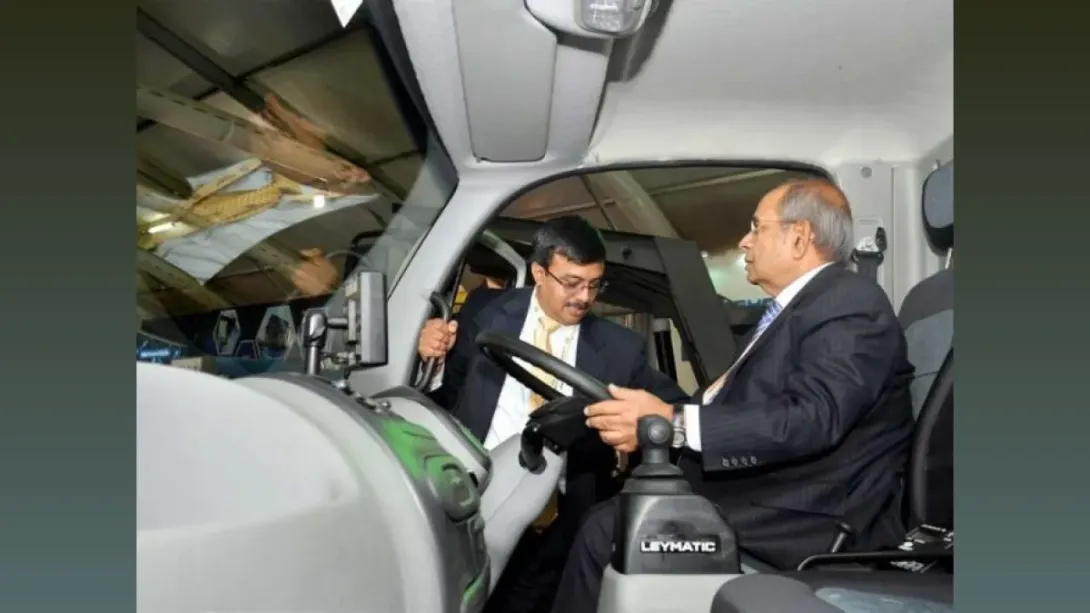
Ashok Leyland, one of India’s leading commercial vehicle manufacturers, has unveiled plans to invest up to Rs. 500 crore in a new battery pack manufacturing facility near Chennai. The greenfield project marks a significant step in strengthening the company’s electric vehicle (EV) ecosystem and reflects the broader transformation underway within India’s automotive sector. The facility, located in Pillaipakkam, is expected to play a strategic role in supporting Ashok Leyland’s growing EV portfolio while enhancing domestic manufacturing capabilities. The investment also aligns with a previously signed memorandum of understanding aimed at expanding industrial infrastructure and accelerating the country’s transition toward sustainable mobility.
Strategic Investment in Electric Mobility
Ashok Leyland has announced plans to establish a new battery pack manufacturing facility near Chennai with an investment estimated between Rs. 400 crore and Rs. 500 crore. The project represents a strategic initiative by the commercial vehicle manufacturer to strengthen its electric mobility capabilities and support the rapidly evolving EV landscape.
The company recently marked the beginning of construction through a groundbreaking ceremony held at Pillaipakkam, an emerging industrial hub near Chennai. The new facility will focus on the production of battery packs, a critical component in electric vehicles that determines both performance and range.
Industry observers view the investment as a clear signal that legacy automotive manufacturers are accelerating their shift toward electrification as regulatory policies and market demand increasingly favor sustainable transport solutions.
Strengthening the Electric Vehicle Ecosystem
Battery technology remains at the heart of the electric vehicle revolution. By investing in domestic battery pack manufacturing, Ashok Leyland aims to enhance supply chain efficiency while reducing reliance on imported components.
The facility is expected to serve as a cornerstone for the company’s EV strategy, enabling the integration of advanced battery systems into its expanding lineup of electric buses and commercial vehicles.
Vertical integration in battery manufacturing can significantly improve operational control and cost efficiency. Analysts suggest that companies capable of securing their battery supply chains will likely gain a competitive advantage as the EV market continues to expand.
For Ashok Leyland, the project not only supports production capacity but also reinforces the company’s broader vision of building a comprehensive electric mobility ecosystem.
Alignment with Long-Term Industrial Investments
The battery pack manufacturing facility is part of a broader investment strategy linked to a memorandum of understanding signed in September 2025. That agreement outlined plans to expand manufacturing infrastructure and support emerging technologies within the automotive sector.
The current investment falls within the framework of that earlier commitment and underscores the company’s intention to position itself as a major participant in India’s EV transformation.
Large-scale investments in manufacturing facilities often have a multiplier effect on regional economies, generating employment opportunities, encouraging supplier ecosystems and strengthening industrial supply chains.
The Chennai region, already a major automotive manufacturing hub, is likely to benefit from the addition of advanced EV infrastructure.
India’s Accelerating Shift Toward Electric Commercial Vehicles
India’s commercial vehicle industry is undergoing a gradual but significant transition toward electrification. Government policies aimed at reducing carbon emissions and promoting sustainable mobility have encouraged manufacturers to accelerate investments in EV technology.
Battery pack manufacturing facilities play a vital role in supporting this transition. They enable automakers to develop vehicles that meet performance standards while maintaining cost competitiveness.
Electric buses and commercial vehicles, in particular, are expected to see strong growth as cities adopt cleaner public transport solutions and logistics companies seek to reduce operating costs through electrified fleets.
Ashok Leyland’s latest investment reflects growing confidence within the industry that electric commercial vehicles will become an integral part of India’s transportation ecosystem.
Outlook for the EV Manufacturing Landscape
The establishment of a dedicated battery pack facility near Chennai highlights the increasing importance of localized manufacturing in the global EV supply chain.
As demand for electric vehicles rises, automakers are prioritizing investments that strengthen technology development, production capabilities and supply chain resilience.
For Ashok Leyland, the new facility represents both an operational upgrade and a strategic commitment to the future of sustainable mobility.
If executed successfully, the project could reinforce the company’s position within India’s rapidly evolving EV market while contributing to the country’s broader ambitions of becoming a global hub for electric vehicle manufacturing.
Comments